top of page

To enrich seniors' lives by promoting healthy brain, body & spirit
Search


Worried Your Phone Is Weakening Your Memory? A Study Of 411,000 Older Adults Suggests The Opposite
By Paul E. Bendheim, MD — Founder of BrainSavers; board-certified neurologist and Clinical Professor of Neurology, University of Arizona College of Medicine – Phoenix; author of The Brain Training Revolution: A Proven Workout for Healthy Brain Aging Benge JF, Scullin MK. "A meta-analysis of technology use and cognitive aging." Nature Human Behaviour, volume 9, pages 1405–1419, 2025. Many of us now keep everything in our phones: appointments, pills, a grandson's birthday. It's

Dr Paul Bendheim
Oct 124 min read


The Myth That Your Brain Peaks At Forty
By Paul E. Bendheim, MD — Founder of BrainSavers; board-certified neurologist and Clinical Professor of Neurology, University of Arizona College of Medicine – Phoenix; author of The Brain Training Revolution: A Proven Workout for Healthy Brain Aging. Adapted from my conversation with host Nancy Margrit on The Practice Pulse, August 2026. A podcast host asked me recently which myth about the brain I would get rid of forever, if I could only pick one. I did not have to think ab
Dr Paul Bendheim
Sep 284 min read


The Best Thing To Do After Learning Something New May Be Nothing At All
More than 60 experiments, 2,622 people. A few quiet minutes after learning helped memory, the benefit lasted a week, and older adults gained almost three times as much.
Dr Paul Bendheim
Sep 185 min read


A New Study Shows the Best Way to Protect Your Aging Brain
Most of us know that healthy habits are good for the brain. Eat well. Move more. Stay social. But here is a bigger question: does it work better to do all of these things together, as one organized program? A major new study says yes — and the results are hard to ignore.

Craig Ullman
Jul 213 min read


A New Study Says Exercise Can Make Your Brain Younger. I've Been Saying So for 25 Years.
Verywell Health asked BrainSavers founder Dr. Paul Bendheim about a new study where a year of regular aerobic exercise kept adults’ brains about a year younger on MRI. Here’s his take — and why he’s been saying it for 25 years.
Dr Paul Bendheim
Jul 173 min read


Brighter Days, Sharper Minds: Daytime Light Exposure And Dementia Risk
A large study of 87,577 adults followed for over 8 years found that people who received more bright light during the day had a lower risk of developing dementia over time. The researchers used wrist-worn devices to objectively measure both daytime and nighttime light exposure, not just self-reported “time outside.”
Dr Paul Bendheim
Jul 143 min read


Enhancing Cognitive Health: The Importance of Active Sitting
Most brain‑health advice says, “Sit less, move more.” That’s still true—but a major study shows something else is just as important: what you do while you’re sitting.
Researchers found that passive sitting, like zoning out in front of the TV, is linked to a higher risk of dementia—but mentally active sitting, like reading or using a computer, is linked to a lower risk.
Dr Paul Bendheim
Jun 254 min read


Mah Jongg and Community: A Strategy for Better Cognitive Health
An article in TC JewFolk highlights how Mah Jongg can support better cognitive health in older adults by combining mental challenge with social connection. The game is more than a pastime; it gives aging adults a way to stay engaged, think strategically, and build the kind of community that supports healthier brains and healthier lives.
With
Dr Paul Bendheim
Jun 171 min read
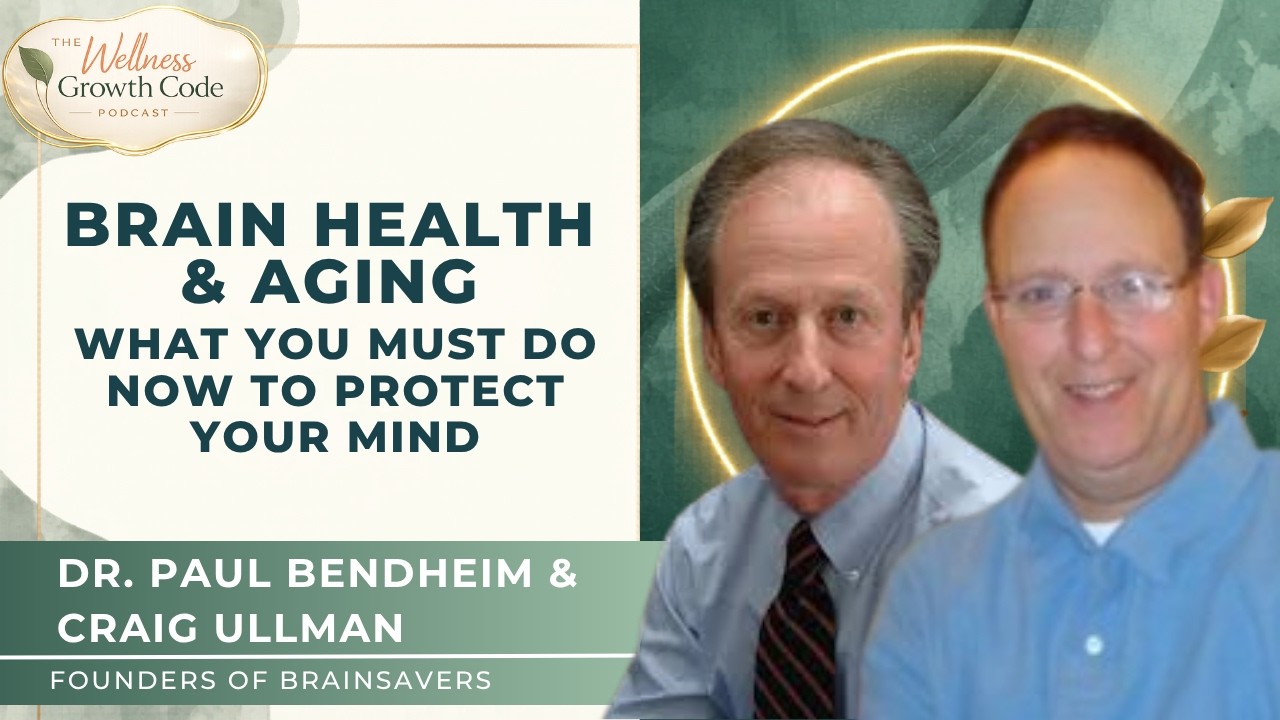
Dr. Bendheim Interviewed on the Wellness Growth Code Podcast on Brain Health and Aging
In this episode of the Wellness Growth Code, host Justine McKell welcomes neurologist Dr. Paul Bendheim and BrainSavers’ Craig Ullman to discuss the essentials of safeguarding your brain as you grow older.
Dr Paul Bendheim
Apr 231 min read


Effective Exercises for Seniors: Senior Health Exercises Evidence and Programs
Maintaining physical activity is essential for older adults to preserve independence, improve our quality of life, and support cognitive health. As we age, our bodies and minds require specific types of exercise that address strength, balance, flexibility, and endurance.
In this blog post, I share practical insights into effective exercises, supported by scientific research. I will also highlight how these exercises can be safely incorporated into daily routines to promot
Dr Paul Bendheim
Apr 74 min read


Small Changes Can Have a Big Impact on Your Healthspan
According to an exciting recent study, most older adults can meaningfully extend their healthspan—the years lived free of major chronic disease—by making very small, combined improvements in sleep, movement, and nutrition, rather than dramatic changes in any one area.
Dr Paul Bendheim
Mar 235 min read


Exercise & Depression: A Game Changer?
I have long advocated that exercise can help reduce symptoms of depression in many adults, especially when done regularly at light to moderate intensity. An updated Cochrane review, just published, further supports my position. It suggests that exercise is generally safe and accessible and can be part of a broader plan to support mood, brain health, and overall well‑being.
Dr Paul Bendheim
Mar 163 min read
bottom of page